
 EN
EN
 AR
AR BG
BG HR
HR CS
CS DA
DA NL
NL FI
FI FR
FR DE
DE EL
EL IT
IT JA
JA KO
KO NO
NO PL
PL PT
PT RO
RO RU
RU ES
ES SV
SV CA
CA IW
IW ID
ID LV
LV LT
LT SR
SR SK
SK SL
SL UK
UK VI
VI SQ
SQ HU
HU TR
TR FA
FA MS
MS GA
GA CY
CY LA
LA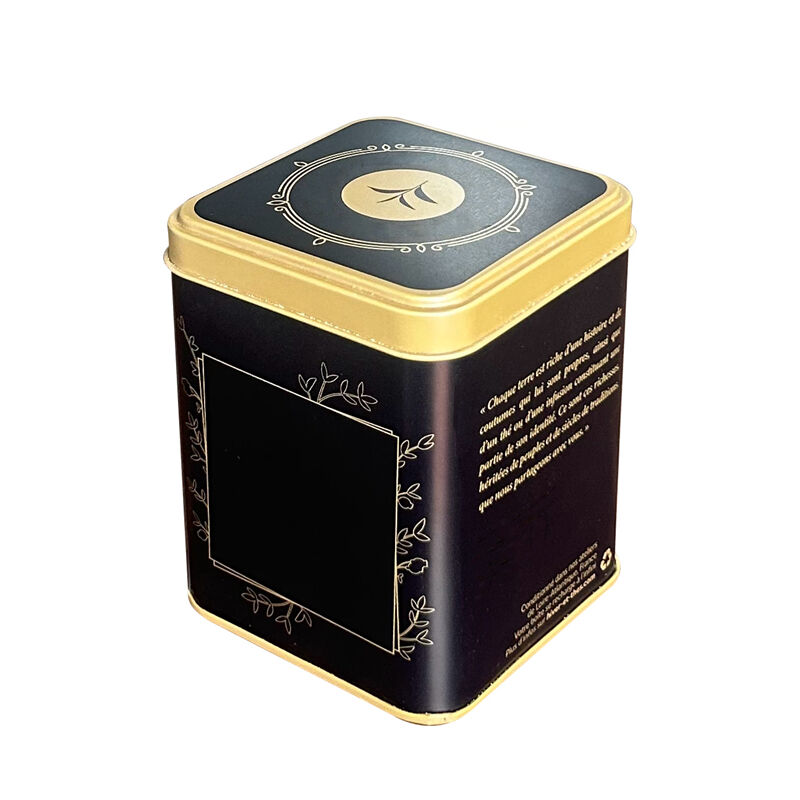
Choosing the right lid for a tin container is one of the most practical decisions in packaging design, yet it is often underestimated. The lid type directly affects how well a product is protected, how consumers interact with the packaging, and whether the final unit meets safety and regulatory requirements. Whether you are packaging food, cosmetics, hardware, or cannabis products, the closure mechanism on your tin container plays a defining role in functionality and brand perception.
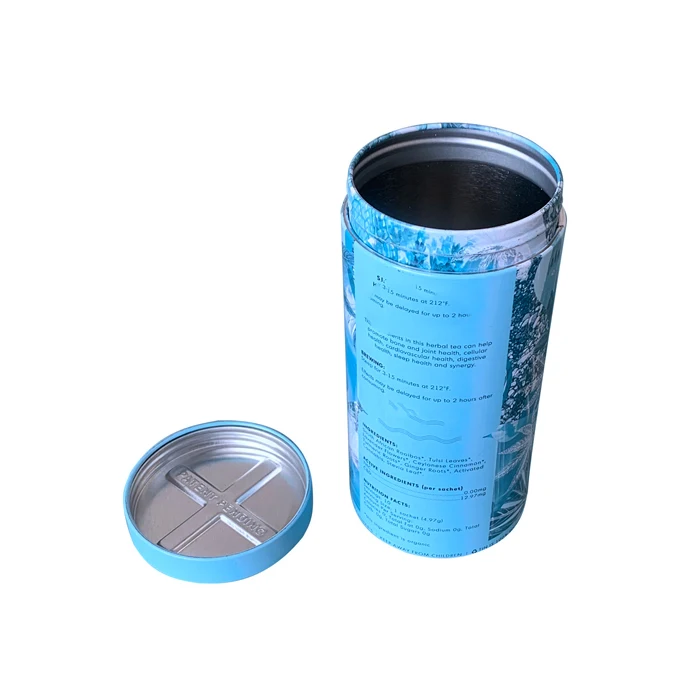
The three most widely used lid types for a tin container are the screw top, the slip lid, and the press-on lid. Each of these closures was engineered to serve a different set of priorities, and understanding their differences allows buyers and product designers to make smarter, more intentional choices. This article breaks down each lid type in depth, covering how each works, where each performs best, and what factors should drive your selection.
How Lid Types Define the Role of a Tin Container
The Lid as a Functional Component
When most buyers think about a tin container, they focus on the body — its dimensions, its finish, or its printing capabilities. But the lid is equally critical. It is the interface between the product and the outside world, responsible for maintaining freshness, preventing contamination, and delivering a consistent user experience every time the container is opened and closed.
Different lid types create fundamentally different user interactions. A screw top demands deliberate engagement — turning requires effort, which creates a secure seal. A slip lid offers simple friction-based closure, relying on a tight tolerance fit. A press-on lid sits between those two in terms of effort, snapping into a locked position with direct downward pressure. Each interaction type communicates something different about the product inside.
For B2B buyers sourcing packaging at scale, these distinctions matter because they affect downstream handling, shipping tolerances, consumer satisfaction, and sometimes regulatory compliance. The right lid choice is not just a design preference — it is a strategic packaging decision tied to the product's full lifecycle.
Lid Mechanics and Seal Integrity
Seal integrity is perhaps the most technically important attribute to evaluate across lid types. A tin container with a poorly fitting lid can allow moisture ingress, oxygen exposure, or contamination — all of which can damage products or trigger liability issues. Understanding the mechanical basis of each seal helps buyers set expectations for performance in real-world conditions.
Screw top lids achieve their seal through continuous thread engagement, which creates a compressive closure around the container opening. Slip lids rely on a controlled dimensional tolerance — the lid is manufactured to fit snugly over the rim of the tin container, relying on friction to hold it in place. Press-on lids use a combination of material flexibility and rim geometry to create a positive snap fit, locking into position when pushed fully down.
Each mechanism has a different sensitivity to manufacturing tolerances, temperature changes, and physical stress during transit. Evaluating these factors in the context of your specific product and supply chain is essential before finalizing a lid type for your tin container program.
Screw Top Lids: Security, Control, and Compliance
How Screw Top Closures Work on a Tin Container
A screw top lid operates on a helical thread system that requires the user to rotate the cap to engage or disengage the seal. On a metal tin container, the thread is typically formed into both the container neck and the lid, creating a matched pair that tightens progressively as the lid is turned. This mechanism is inherently secure because the lid cannot be removed without deliberate rotational effort.
The screw top is particularly well-suited for applications where re-sealability is important. Products that are used in stages — such as loose-leaf tea, powdered supplements, artisan salts, or cannabis flower — benefit from a lid that can be opened and closed repeatedly without losing seal quality. Each re-sealing action re-engages the thread, restoring a secure closure.
In terms of manufacturing, screw top lids require a higher level of dimensional precision compared to slip or press-on alternatives. The threads must be consistent across both the container and the lid to ensure smooth operation and a reliable seal. This typically makes screw top tin container products slightly more expensive to produce, but the added functional value justifies the cost in many applications.
Child-Resistant Screw Top Features and Regulatory Relevance
One of the most important applications of the screw top lid is in child-resistant packaging. For industries such as cannabis, pharmaceuticals, and certain chemical products, regulations require that packaging be difficult for children under a certain age to open while still being accessible to adults. A Tin Container designed with a child-resistant screw top typically incorporates a push-down-and-turn mechanism, requiring simultaneous downward pressure and rotational movement to unlock the lid.
This design is widely adopted in the cannabis retail market, where compliance with child-safety packaging requirements is mandatory in many jurisdictions. A tall tin container with a child-resistant screw top combines a generous storage capacity with compliant closure mechanics, making it a practical choice for pre-rolls, flower, edibles, and other cannabis formats. The screw top mechanism in this context is not just a convenience feature — it is a legal requirement.
Beyond compliance, child-resistant screw tops also provide an added layer of tamper evidence. A container that has been opened is typically noticeable because the lid sits differently once the original seal is broken. This provides basic assurance to end consumers that the product has not been previously accessed, which is especially important in medical and wellness categories.
Slip Lids: Simplicity, Speed, and Wide Application
The Mechanics and Appeal of the Slip Lid
The slip lid is arguably the most traditional closure type associated with the classic tin container. It consists of a flat or slightly domed lid that fits over the exterior rim of the container, held in place entirely by friction from a precise dimensional fit. There are no threads, no snap features, and no locking mechanisms — the lid slides on and off cleanly.
This simplicity is the slip lid's greatest strength. It makes packing and unpacking extremely fast, which has significant appeal in gift packaging, retail display setups, and applications where speed of access is valued. Mint tins, candy boxes, cookie tins, and promotional gift containers are classic examples of products that commonly use slip lid tin container formats.
The slip lid also offers excellent surface area for printing and embossing. Because the lid is a flat or simply curved panel without threading or snap features, it presents an uninterrupted canvas for graphics. Brands that want the lid to function as a high-visibility branding surface frequently prefer slip lid designs for their tin container packaging.
Limitations of the Slip Lid in Demanding Applications
While the slip lid excels in many applications, it has clear limitations in scenarios where secure retention is critical. Because the lid relies on friction rather than a mechanical lock, it can be dislodged by accidental impacts, drops, or changes in pressure. A tin container with a slip lid that is overfilled, exposed to temperature fluctuations, or shipped without additional securing measures may arrive with its lid displaced.
For liquid or semi-liquid products, the slip lid is generally not appropriate without secondary sealing methods such as internal liners or external shrink bands. This limits its application primarily to dry goods and non-pressurized solid contents. Buyers evaluating a slip lid for their tin container should carefully assess whether the product and its supply chain conditions are compatible with friction-only closure.
Tolerance control in manufacturing is also especially critical for slip lid containers. If the fit is too loose, the lid falls off; if it is too tight, the lid becomes difficult to remove and may require a coin or tool for leverage. A well-made slip lid tin container requires tight quality standards across the production run to deliver a consistently satisfying user experience.
Press-On Lids: Positive Engagement with Easy Access
How Press-On Lids Deliver a Tactile Closure
A press-on lid provides a closure that sits between the simplicity of the slip lid and the security of the screw top. Rather than relying purely on friction or thread engagement, the press-on lid uses the material flexibility of the lid and the geometry of the container rim to create a positive snap-fit closure. When pushed down firmly, the lid locks into a retention groove or bead on the container rim.
This snap-in engagement gives the press-on lid a distinctive tactile quality — users hear and feel a satisfying click when the lid is fully seated. This sensory confirmation is not trivial; it reinforces the perception of a secure, quality closure. For premium cosmetics, artisan food products, or branded promotional items, the tactile experience of pressing a lid shut contributes meaningfully to how consumers evaluate the packaging and the product.
On a tin container, press-on lids are frequently used in formats such as round tins for lip balm, wax, cosmetics, candles, and similar products where the opening is proportionally wide and the content is applied in small amounts at a time. The ease of pressing open and pressing shut aligns well with these usage patterns.
Durability and Reuse Characteristics of Press-On Closure
One of the considerations unique to press-on lids is how the snap-fit mechanism holds up over repeated open-and-close cycles. On a well-engineered tin container, the press-on lid can withstand hundreds of cycles without losing significant grip because the metal retains its spring-like character over time. However, if the lid is forced open rather than properly leveraged, or if the container rim is deformed by impact, the fit may loosen prematurely.
For products intended for extended shelf use or travel — such as solid perfume, travel candles, or hobby supplies — the press-on tin container is a reliable choice because it balances accessibility with containment. The user does not need to apply significant force to open the tin, but the lid stays in place under normal movement and light impacts.
From a production standpoint, press-on lids are moderately demanding in terms of tooling and tolerance control but are less complex than screw top manufacturing. This positions them as a competitive mid-tier option for buyers who need better retention than a slip lid provides but do not require the regulatory-grade security of a screw top closure on their tin container.
Selecting the Right Lid for Your Tin Container Application
Matching Lid Type to Product Requirements
The most reliable way to select a lid type is to work backward from the product's specific requirements rather than forward from a default or familiar format. Start by identifying the most critical performance need: is it regulatory compliance, re-sealability, display appeal, shipping durability, or ease of consumer access? Each of these priorities points toward a different lid type for your tin container.
Regulatory compliance requirements, particularly in cannabis, pharmaceuticals, or chemical storage, almost always lead to the screw top — and specifically to child-resistant variants. Display appeal and gift packaging naturally favor the slip lid due to its clean print surface and fast-open convenience. Products that require reliable re-sealing and a premium tactile feel without regulatory complexity often find the press-on lid to be the ideal match.
It is also worth considering the end consumer's context. A tin container opened by a retail clerk behind a counter is used differently than one opened daily by an end consumer at home. Understanding the usage environment helps ensure that the selected lid type supports a smooth and satisfying interaction at every stage.
Volume, Cost, and Manufacturing Feasibility
For buyers sourcing tin container products at B2B volumes, cost and manufacturing feasibility are practical constraints that influence lid selection. Screw top lids generally carry higher tooling and unit costs due to thread precision requirements. Slip lids are typically the most economical option across standard sizes. Press-on lids occupy a middle range, with cost varying based on the complexity of the snap-fit geometry and the quality of the tolerance control required.
Minimum order quantities, lead times, and prototyping timelines can also vary between lid types, particularly if custom dimensions or finishes are involved. For new product launches, it is advisable to request samples across lid formats before committing to a full production run, allowing physical testing of seal quality, ease of use, and branding presentation on the actual tin container body.
Long-term packaging programs benefit from establishing clear lid specifications in supplier agreements, including tolerance ranges, cycle test requirements, and finish standards. This ensures that the tin container performance you validate in sampling is consistently delivered across ongoing production batches.
FAQ
What is the most secure lid type for a tin container used in cannabis packaging?
For cannabis packaging, the child-resistant screw top is the most secure and compliant lid type. It requires a push-down-and-turn motion to open, which satisfies child-safety regulations in most regulated markets. A tall tin container with this closure type combines ample storage volume with the compliance and tamper-evidence features required by cannabis retailers and distributors.
Can a tin container with a slip lid be used for shipping products?
A tin container with a slip lid can be used for shipping, but it typically requires secondary securing measures such as shrink wrap, adhesive tape, or protective inner sleeves to prevent lid displacement during transit. For products where secure closure is essential, screw top or press-on lids are generally more suitable for direct shipping without additional packaging support.
How many times can a press-on lid be opened and closed before it loses its grip?
A well-manufactured press-on lid on a quality tin container can typically withstand several hundred open-and-close cycles before the snap-fit begins to loosen noticeably. The exact number depends on the material gauge, rim geometry, and how the lid is opened. Proper technique — using thumb pressure on the rim edge rather than forcing the lid — significantly extends the usable life of a press-on closure.
Is it possible to customize the finish on all three lid types for a tin container?
Yes, all three lid types — screw top, slip, and press-on — can be finished with lithographic printing, matte or gloss coatings, embossing, or debossing on a tin container. The slip lid typically offers the largest flat printing surface area, making it the most popular choice for elaborate graphic designs. Screw top and press-on lids can also carry branding but may have more geometric constraints depending on their shape and dimensions.
Table of Contents
- How Lid Types Define the Role of a Tin Container
- Screw Top Lids: Security, Control, and Compliance
- Slip Lids: Simplicity, Speed, and Wide Application
- Press-On Lids: Positive Engagement with Easy Access
- Selecting the Right Lid for Your Tin Container Application
-
FAQ
- What is the most secure lid type for a tin container used in cannabis packaging?
- Can a tin container with a slip lid be used for shipping products?
- How many times can a press-on lid be opened and closed before it loses its grip?
- Is it possible to customize the finish on all three lid types for a tin container?