
 EN
EN
 AR
AR BG
BG HR
HR CS
CS DA
DA NL
NL FI
FI FR
FR DE
DE EL
EL IT
IT JA
JA KO
KO NO
NO PL
PL PT
PT RO
RO RU
RU ES
ES SV
SV CA
CA IW
IW ID
ID LV
LV LT
LT SR
SR SK
SK SL
SL UK
UK VI
VI SQ
SQ HU
HU TR
TR FA
FA MS
MS GA
GA CY
CY LA
LA
Choosing the correct size for a Tin Container is one of the most practical yet frequently overlooked decisions in packaging. Whether you are storing food products, cosmetics, candles, hardware, or promotional items, the dimensions of your Tin Container have a direct impact on product protection, shipping efficiency, shelf presentation, and overall cost. Getting the size wrong — even by a small margin — can mean wasted materials, poor customer experience, or expensive redesign cycles.
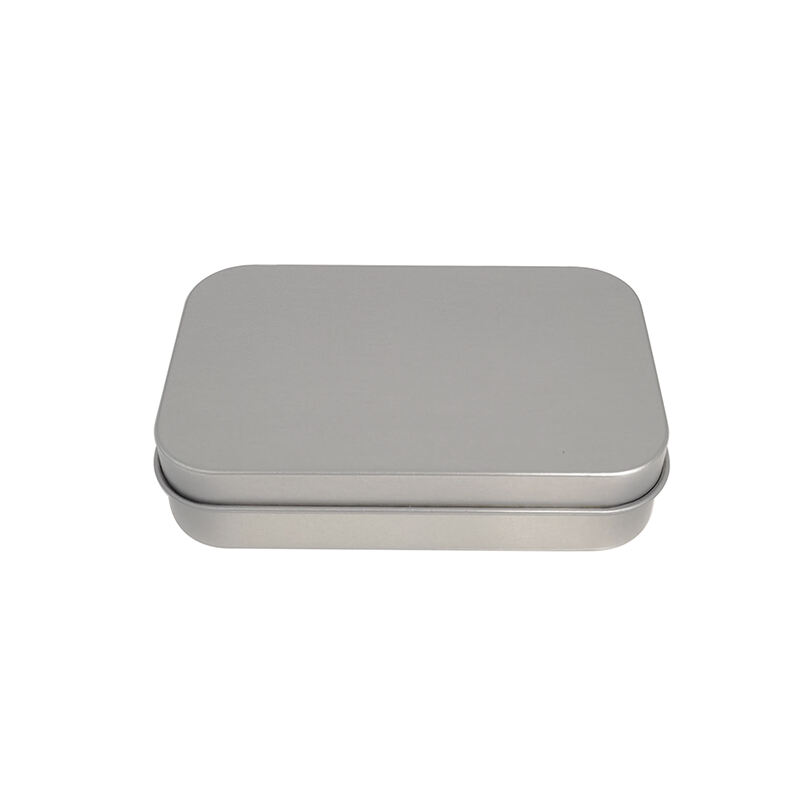
This guide walks you through the exact methodology for calculating the right Tin Container size for your specific application. From understanding your product's physical dimensions to factoring in wall thickness, fill levels, and stacking requirements, every step of the sizing process matters. By the end of this article, you will have a clear, systematic approach to selecting or custom-ordering a Tin Container that fits your needs precisely — without guesswork or costly trial-and-error.
Understanding the Core Dimensions of a Tin Container
Internal vs. External Measurements
When sizing a Tin Container, the most fundamental distinction to understand is between internal and external measurements. The internal dimensions determine what you can actually fit inside the container, while the external dimensions affect how the Tin Container fits on a shelf, in a shipping carton, or within a display unit. These two sets of numbers differ because tin material has a measurable wall thickness, typically ranging from 0.20 mm to 0.35 mm depending on the grade and manufacturer specification.
For most standard packaging applications, internal measurements are the starting point. You measure your product first — its height, width or diameter, and any irregular protrusions — and then select or design a Tin Container whose internal cavity comfortably accommodates those dimensions. A general industry practice is to allow between 2 mm and 5 mm of clearance on each side so the product can be inserted and removed without friction damage.
External measurements become critical when you are planning packing configurations, retail display spacing, or transport logistics. A Tin Container that fits your product internally may still create problems if its external footprint does not align with your shelf grid, display tray, or corrugated shipper dimensions. Always document both sets of measurements before committing to a size specification.
Key Dimensional Variables to Record
For a rectangular or square Tin Container, the three essential measurements are length, width, and depth (or height). For a round or cylindrical Tin Container, you need the internal diameter and the height. These are your baseline numbers. However, several additional variables affect how accurate your size calculation will be in practice.
Lid clearance is one such variable. Many Tin Container designs feature a slip lid, friction lid, or hinged closure, each of which adds a small but meaningful amount to the overall height. A slip lid typically adds 5 mm to 10 mm to the total closed height of the container. If you are stacking containers or designing a display, this figure must be included in your calculations.
Embossing, debossing, or printing features on the exterior of a Tin Container may also slightly affect usable internal dimensions. While the effect is minimal in most cases, it is worth verifying with your supplier when working with custom-designed containers where decorative elements are specified.
Step-by-Step Method for Calculating the Right Tin Container Size
Step One — Measure Your Product Accurately
The first and most important step is to measure the actual product going into the Tin Container. Use calipers for precision rather than a standard ruler, especially for small or irregularly shaped items. Measure the product at its widest, tallest, and deepest points. If the product compresses slightly (such as a soft food item or fabric), measure it in its natural uncompressed state, then factor in realistic compression when determining whether it will fit.
For products that will be placed inside additional packaging — such as a candle in a paper sleeve, or a gift item on a decorative insert — measure the total packaged unit rather than the product alone. The Tin Container must accommodate the full assembly, not just the core product. This is a step many buyers skip, leading to immediate sizing conflicts once production samples arrive.
If you are packaging multiple items together — a set of teas, a selection of small tools, or a collection of cosmetics — arrange them in their intended configuration and measure the resulting group as a single unit. This gives you the true minimum internal volume your Tin Container must provide.
Step Two — Apply the Clearance Formula
Once you have your product dimensions, apply a clearance margin to arrive at your target internal dimensions. The standard formula is straightforward: Internal dimension = Product dimension + (2 × side clearance). For most solid products, a side clearance of 2 mm to 4 mm is appropriate. For fragile items, increase that to 5 mm to 8 mm to allow for protective inner padding such as foam, cotton, or tissue paper.
Height clearance follows a slightly different logic. If the lid of your Tin Container sits directly on top of the product (a common configuration for candles or cosmetic rounds), the internal height should match the product height closely — within 1 mm to 2 mm. If there is a headspace requirement for gases (as in certain food applications) or aesthetic reasons (such as a branded tissue paper top), add the relevant headspace to your internal height target.
Always round your calculated internal dimensions up to the nearest whole millimeter when communicating with a Tin Container supplier. This avoids the risk of ordering a container that is marginally undersized due to manufacturing tolerances, which typically run ±0.3 mm to ±0.5 mm on standard tin production.
Step Three — Account for Fill Level and Volume
For liquid or semi-liquid products — such as lip balm, wax, honey, or paste — sizing your Tin Container by volume rather than linear dimensions is often more practical. The gross internal volume of a rectangular container is calculated as V = L × W × H, while for a cylindrical Tin Container the formula is V = π × r² × H, where r is the internal radius.
Keep in mind that most fillable products are not filled to 100% of the container's internal volume. Standard food and cosmetic filling practices typically target 85% to 95% fill levels, leaving a small headspace. Calculate your required fill volume first, then divide by your target fill percentage to determine the minimum internal volume your Tin Container must offer.
This calculation also helps with cost control. A Tin Container that is oversized relative to your fill volume means wasted tin material, higher per-unit cost, and a product that feels visually incomplete when opened. Right-sizing based on fill volume ensures that the container and its contents are proportionally matched, which directly improves perceived product quality.
Matching Tin Container Size to Shipping and Display Requirements
Designing Around Your Shipping Carton
A Tin Container does not exist in isolation — it travels. Your choice of size should align with the corrugated shipping carton or mailer box you use, ideally in a configuration that minimizes void fill and maximizes units per carton. Work backwards from your target carton size: divide the carton's internal dimensions by the external dimensions of your Tin Container to determine how many units fit per row and per layer.
For example, if your shipping carton's internal length is 400 mm and your Tin Container's external length is 105 mm, you can fit three containers per row with 85 mm of remaining space — space that either becomes void fill or signals that a slightly different container size would yield a cleaner pack configuration. These calculations, done at the planning stage, can meaningfully reduce your per-unit logistics cost.
Stack stability is also a function of container size. Taller, narrower Tin Container designs are more prone to tipping in transit than shorter, wider formats. If your product naturally lends itself to a tall container but you are concerned about in-transit stability, consider designing with a wider base or specifying a carton configuration that limits vertical movement.
Retail Shelf and Display Fit
If your Tin Container will appear on a retail shelf, check the standard shelf depths and slot widths used by your key retail channels. Standard retail gondola shelves range from 300 mm to 450 mm in depth, and your container's external depth should leave at least 20 mm behind for the shelf edge strip or price tag rail. This prevents the container from hanging precariously over the shelf edge.
For gift or seasonal retail displays, where containers are often stacked or grouped, the footprint of your Tin Container affects how many units can be presented per square foot of display space. A container that is 10 mm narrower than a competing format can mean one additional unit visible per row — a small number that compounds into significant display volume across hundreds of retail locations.
For e-commerce-focused brands, where the Tin Container is primarily shipped directly to consumers, retail display fit is less relevant. In this context, sizing decisions should prioritize product protection during transit and unboxing aesthetics — how the container looks and feels when the customer opens their parcel for the first time.
Special Considerations for Custom and Non-Standard Sizes
When Standard Sizes Do Not Fit Your Needs
Most Tin Container manufacturers offer a range of standard sizes that cover the most common packaging applications. However, certain products — unique gift sets, specialty food items, or branded promotional packaging — may require custom dimensions that fall outside standard molds. In these cases, understanding the tooling and minimum order implications is essential before committing to a custom size.
Custom Tin Container tooling typically involves a one-time mold or die fee. This cost is amortized over your production volume, so it is more economically justified for larger orders. Before investing in custom tooling, verify that the size difference from the nearest standard format actually delivers a meaningful functional or commercial benefit. A 3 mm difference in internal dimension rarely justifies the cost of a new mold unless it solves a genuine product fit problem.
When working with a supplier on a custom Tin Container size, always request a physical sample — ideally a pre-production white sample — before approving mass production. This allows you to test product fit, lid closure, fill level, and label application with your actual product before committing to tooling costs and production quantities.
Tolerance Management in Production
Even when your size calculations are correct on paper, real-world production introduces tolerances. Standard Tin Container manufacturing tolerances are typically ±0.3 mm to ±0.5 mm on linear dimensions and ±1 mm on height. These tolerances are well within acceptable ranges for most applications, but they matter when you are working with very tight product-to-container fits or precision-stacking configurations.
To manage tolerance risk, always build a small buffer into your size specifications when calculating the internal dimensions of a Tin Container. Rather than specifying an internal length that exactly matches your product, specify a length that is 1 mm to 2 mm larger than your product's widest measured point. This buffer absorbs normal manufacturing variation without compromising product fit.
Tolerance management becomes especially important for Tin Container designs where the lid must slide smoothly over a body — too tight and the lid becomes difficult to close; too loose and the lid falls off. Lid-to-body fit is governed by a separate set of tolerances that your supplier should be able to specify and guarantee in their quality documentation.
FAQ
How do I know if my product needs a round or rectangular Tin Container?
The shape of your Tin Container should follow the shape of your product or the visual identity of your brand. Round containers are ideal for single round products such as candles, cosmetic rounds, or food discs. Rectangular or square containers offer more internal volume efficiency for products with angular or flat profiles, or for multi-item sets. Round tins also tend to be more economical in standard production runs, while rectangular formats offer more surface area for label design and branding.
What is the minimum wall clearance I should leave inside a Tin Container?
For a solid product without inner packaging, allow a minimum of 2 mm of clearance on each side between the product and the inner wall of the Tin Container. For fragile items or products that include inner padding, increase this to at least 5 mm per side. Products filled with protective tissue or foam inserts may require 8 mm to 12 mm of clearance depending on the thickness of the insert material used.
Can I use volume calculations alone to size a Tin Container for liquids?
Volume calculations are a practical starting point for liquid-fill products, but they must be combined with linear dimension checks to ensure the Tin Container shape is appropriate for your filling equipment and sealing process. Some filling lines have fixed nozzle spacings or bowl clearance requirements that constrain the diameter or opening size of the container. Always verify that your calculated volume and your specific container shape are compatible with your filling operation before finalizing a size.
How does stacking affect my Tin Container size selection?
If your Tin Container will be stacked during storage or display, the external height and the lid profile are critical. Slip-lid containers typically stack more securely than friction-lid formats because the lid rim provides a natural ledge. Calculate your stacking height by multiplying the external closed height of a single Tin Container by your intended stack count, then verify that this total height fits within your shelf, warehouse, or display constraints without creating a safety or stability risk.